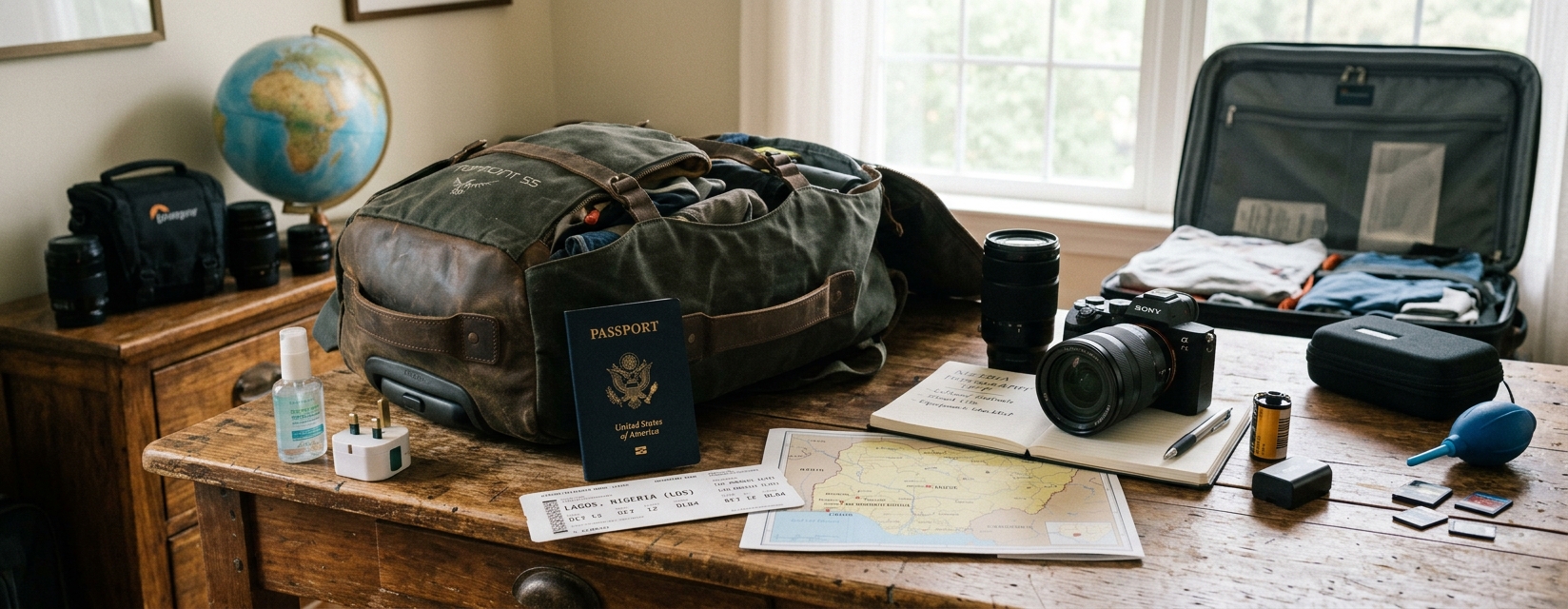
You Don’t Need to Travel to Africa for Your Photography or Video Project
Africa is one of the most visually diverse places in the world.
From busy urban streets and modern business districts to traditional markets, breathtaking landscapes, cultural celebrations, transportation systems, food, architecture, technology, business, wildlife and everyday life, the continent offers an enormous range of visual stories waiting to be captured.
Yet, for many international organisations, brands, publishers, filmmakers, advertising agencies, researchers and content creators, producing photography or video content in Africa often seems to come with one obvious requirement:
You have to travel to Africa yourself.
But do you really?
The answer is not necessarily.
While there are certainly situations where travelling to Africa for a photography or video production makes sense, there are many projects that can be successfully planned, coordinated and executed by experienced local photographers and videographers who are already on the ground.
In many cases, working with the right local creative professional can save you significant time, reduce production costs, simplify logistics and give you access to a level of local knowledge that can be difficult to obtain when you arrive as an outsider.
The Real Cost of Travelling for a Photography or Video Project
At first glance, travelling to Africa for a production project may seem straightforward.
You book a flight, arrange accommodation, hire equipment, plan your shoot and get to work.
But the actual cost of an international production can quickly become much higher than the initial budget suggests.
There is the international flight, airport transportation, hotel accommodation, meals, local transportation, equipment transportation, insurance, permits, visas where applicable, location scouting, assistants, translators, local fixers and numerous other expenses.
There is also the cost of time.
A project that requires only two or three days of actual shooting may require several additional days for international travel, settling in, scouting locations, recovering from long flights and preparing for the production.
For a small or medium-sized project, these additional expenses can sometimes represent a significant portion of the overall production budget.
And then there are the unexpected costs.
A delayed flight.
A change in location.
Additional transportation.
Unexpected accommodation expenses.
Equipment issues.
Weather changes.
Permit requirements.
Changes to the production schedule.
These are realities that can affect almost any production, regardless of where it takes place.
There Are Benefits to Travelling to Africa
This does not mean travelling to Africa for a production project is a bad idea.
Far from it.
Being physically present can provide enormous advantages.
You can personally scout locations, interact with subjects, direct the production team, make creative decisions on location and respond immediately when something unexpected happens.
For large productions, advertising campaigns, documentaries, feature films or highly specialised projects, having the client or creative director physically present may be essential.
There is also something valuable about experiencing a location yourself.
You may arrive with a creative concept in mind and discover something completely different once you are there.
A street, a person, a landscape, an event or an unexpected moment can completely change the direction of a project.
Travelling can therefore provide creative opportunities that are difficult to replicate remotely.
But travelling is not always necessary.
And this is where local production becomes particularly valuable.
The Advantage of Working With Someone Already in Africa
Imagine that you need photographs or video footage from Lagos.
Instead of booking an international flight, arranging accommodation and spending several days travelling, you could work with a photographer or videographer who is already based in Lagos.
They already understand the environment.
They know how the city moves.
They know where to find certain types of locations.
They understand local transportation.
They know when particular places are busy or quiet.
They understand cultural expectations.
They may already have relationships with local businesses, communities, event organisers, location owners, models, assistants and other production professionals.
Most importantly, they are already there.
That can make a significant difference.
Local Knowledge Can Make the Difference
Photography and video production are not simply about owning a good camera.
Knowing where to point the camera can be just as important.
A local creative professional can bring contextual knowledge that an international production team may not have.
For example, if you are looking for authentic images of transportation in Lagos, someone who lives and works in the city may already know the major transportation hubs, distinctive vehicles, busy roads, markets and neighbourhoods that can visually communicate the story.
If you need footage showing everyday life, a local photographer can often identify opportunities that may not appear in a conventional location search.
If you need corporate images, they may know modern business districts, office locations and professional environments that fit the brief.
If you need cultural or editorial content, they may know when and where particular events take place and how best to approach them.
This is one of the major advantages of local production.
You are not simply hiring someone to operate a camera.
You are gaining access to local knowledge, local relationships and local perspective.
Authenticity Matters
There is another important consideration: authenticity.
When creating visual content about Africa for an international audience, authenticity matters.
Africa is often represented through a relatively narrow visual lens.
Images frequently focus on wildlife, poverty, traditional ceremonies or dramatic landscapes, while the everyday realities of modern African life receive far less attention.
But Africa is much more than these familiar visual themes.
African cities are changing rapidly.
There are technology companies, modern offices, creative communities, restaurants, shopping centres, transportation networks, universities, financial districts, startups, construction projects and countless other stories taking place every day.
There are also millions of ordinary moments that tell powerful stories.
A commuter waiting for transportation.
A trader arranging products in a market.
A technology professional working in an office.
A family going about its daily routine.
A construction worker contributing to a growing city.
A business owner serving customers.
Aerial views of expanding neighbourhoods.
These moments help create a more complete visual representation of the continent.
A photographer who lives in the environment can help identify these stories.
They can capture Africa as it actually looks and feels today—not simply as it is imagined from outside the continent.
You Can Still Maintain Creative Control
One concern clients may have about remote production is losing creative control.
That does not have to happen.
Modern communication technology makes it possible to collaborate closely with a local production team before, during and after a shoot.
Creative briefs can be shared in advance.
Mood boards can be provided.
Reference images can establish the desired visual direction.
Shot lists can clearly communicate what needs to be captured.
Locations can be discussed and approved before production.
During the shoot, photographs, short clips or previews can be shared for feedback where appropriate.
This allows the client to remain involved in the creative process without necessarily being physically present.
The key is communication.
A well-prepared production brief combined with an experienced local photographer or videographer can produce excellent results.
Local Production Can Be More Cost-Effective
Cost is another major reason to consider working with local professionals.
Instead of paying for international travel, accommodation and other travel-related expenses, your budget can be concentrated on the actual production.
That may mean better equipment, additional shooting days, more locations, additional crew members, professional editing or a larger collection of final photographs and video footage.
The savings can become particularly significant when a project involves multiple locations or requires repeated production over several days.
For example, if an organisation needs visual content from Lagos, Abuja, Accra, Nairobi or another African city, sending a production team from another continent to each location can quickly become expensive.
Working with trusted professionals in each location can provide a much more flexible approach.
Instead of one international team travelling thousands of kilometres, multiple local creatives can potentially execute different parts of the assignment while maintaining a common creative direction.
This can make production more scalable.
Safety and Risk Management
Safety is another consideration that should not be ignored.
Travelling to an unfamiliar country for a production project requires planning.
You need to understand the local environment, transportation options, locations, cultural expectations and potential risks.
A reputable local creative professional can help navigate these issues.
They can advise on appropriate locations and shooting times, identify areas that may require additional precautions, arrange reliable transportation and help the production team avoid unnecessary complications.
Of course, local knowledge does not eliminate every risk.
Every production should still carry out appropriate risk assessments and follow professional safety procedures.
However, having someone experienced on the ground can make the process significantly easier.
You Are Hiring More Than a Photographer
When you hire the right person locally, you are not simply hiring somebody with a camera.
You are potentially hiring a local production partner.
That distinction is important.
A production partner can help with location scouting, scheduling, transportation, permits, local contacts, assistants, equipment and other aspects of the production.
They can also help you understand what is realistically achievable within your budget and timeframe.
This can be particularly valuable for clients who have never produced content in Africa before.
Instead of arriving and trying to figure everything out from scratch, you can begin the project with someone who already understands the environment.
That local knowledge can save valuable time.
Local Creatives Understand the Environment
One of the biggest advantages of working with a local photographer or videographer is their ability to understand the rhythm of the environment.
Every city has its own character.
Lagos is not Abuja.
Accra is not Nairobi.
Nairobi is not Johannesburg.
Cape Town is not Dakar.
Even within the same city, different neighbourhoods can offer completely different visual opportunities.
A local creative understands these differences.
They know how weather can affect a shoot.
They understand traffic patterns.
They know when natural light may be most useful.
They understand local events and activities.
They know which locations can provide the visual atmosphere required for a particular story.
This knowledge can help transform a simple production brief into a stronger visual project.
Remote Production Does Not Mean Lower Quality
There can sometimes be a misconception that working remotely means accepting lower production standards.
That is not necessarily true.
Professional photography and video production depend on the skill, experience, equipment, preparation and creative judgement of the person handling the assignment—not simply on whether the client is physically standing beside the camera.
A professional local photographer can work from a detailed brief, follow a shot list, maintain consistent visual standards and deliver files according to agreed specifications.
The same applies to video.
Frame rates, resolutions, aspect ratios, camera profiles, audio requirements, shot durations and delivery specifications can all be agreed before production begins.
The more clearly the project is communicated, the easier it becomes for everyone involved to work toward the same result.
When Should You Actually Travel?
There are still plenty of situations where travelling to Africa is the better option.
If your project requires extensive direction from an international creative team, complex equipment, a large production crew, specialised talent or direct interaction with the client, being physically present may make sense.
Documentaries, major advertising campaigns, feature productions and large-scale commercial projects may require a different production structure.
There may also be projects where the creative director needs to personally experience the location before making important decisions.
In those situations, travelling can be worthwhile.
But for many assignments, travelling is simply one option—not a requirement.
If you need a collection of photographs, several short video clips, location footage, aerial imagery, editorial content or visual documentation of a particular African city or subject, local production may be a practical alternative.
The Most Important Part: Finding the Right Hands
The success of remote production ultimately depends on one thing:
Who you trust to execute the project.
Not every photographer or videographer will be suitable for every assignment.
Before commissioning someone, review their portfolio carefully.
Look at the quality and consistency of their work.
Check whether they have experience with the type of photography or video you require.
Discuss the creative brief in detail.
Clarify the deliverables, timelines, locations, licensing requirements and budget.
Most importantly, make sure they understand exactly what you are trying to communicate through the images or video.
The right professional should be able to ask questions, make suggestions and identify potential challenges before the production begins.
What Should You Include in Your Project Brief?
If you are planning to commission a local photographer or videographer in Africa, a clear project brief can make the process much easier.
At a minimum, your brief should explain:
- What you want to photograph or film.
- Where the project will take place.
- The purpose of the content.
- The intended audience.
- The number of photographs or length of video required.
- Preferred visual style.
- Required equipment or technical specifications.
- Shooting dates or production timeframe.
- Whether models, talent or locations are required.
- Whether releases or permissions are required.
- How the final files should be delivered.
- Your budget or expected production range.
The clearer the brief, the easier it is for the local creative professional to determine how the project can be executed.
It also reduces misunderstandings and unnecessary revisions.
Africa Is Already Here
One of the biggest misconceptions about producing visual content in Africa is that you have to physically arrive on the continent before meaningful work can begin.
You don't.
Africa already has thousands of talented photographers, videographers, filmmakers, drone operators, editors, producers and other creative professionals working across the continent.
They are already living in the environments you want to document.
They understand their cities.
They understand their communities.
They understand the culture.
And they can often move faster because they are already on the ground.
The question, therefore, is not always:
"When can we travel to Africa?"
Sometimes the better question is:
"Who can we trust in Africa to produce this for us?"
A Different Way to Approach African Visual Production
The future of international visual production does not necessarily have to involve flying an entire production team across the world.
A more flexible model is possible.
International clients can provide the creative direction, objectives and production requirements, while experienced African creatives handle the execution locally.
This approach can reduce unnecessary travel, minimise production expenses and create opportunities for African photographers and filmmakers to tell stories from their own environments.
It can also result in something even more valuable:
A more authentic representation of Africa.
For organisations working across multiple African markets, this model can be particularly useful.
Rather than treating Africa as one large destination requiring one large production trip, each location can be approached through professionals who understand the specific environment.
That can create a more diverse and accurate visual library.
The Bigger Opportunity
There is a much bigger opportunity behind local production.
Africa is not simply a destination where international organisations come to create content.
Africa has its own growing creative economy.
Photographers, filmmakers, editors, designers, producers, drone operators and other creative professionals are building careers and businesses across the continent.
By commissioning local professionals, international clients can access local expertise while also contributing to the growth of the creative industry.
It creates a relationship that can benefit both sides.
The client gets access to local knowledge and production capability.
The creative professional gets an opportunity to work on meaningful projects and build international relationships.
And the resulting content can provide audiences around the world with a richer understanding of Africa.
Before You Book That Flight
If you are planning a photography or video project somewhere in Africa, the first question does not necessarily have to be:
"How do we get there?"
Instead, consider asking:
"Can this project be successfully executed by an experienced professional already there?"
The answer may surprise you.
You may discover that the project can be completed faster.
You may discover that your budget can go further.
You may discover locations you would never have found on your own.
You may discover that local knowledge improves the quality and authenticity of your content.
And you may discover that you did not need to travel at all.
Conclusion
There are genuine benefits to travelling to Africa for photography and video projects.
Being physically present can provide creative control, direct collaboration and an opportunity to experience the environment first-hand.
But travel should not automatically be considered a requirement.
For many projects, working with an experienced local photographer or videographer can provide a practical, efficient and cost-effective alternative.
The right local creative professional can bring more than technical photography or video skills.
They can bring local knowledge, cultural understanding, location expertise, relationships and an authentic perspective that can strengthen the final production.
Africa already has the talent.
Africa already has the locations.
Africa already has the stories.
And there are professionals already on the ground who can help bring those stories to audiences around the world.
So, before you book that flight, book a hotel and start planning an international production trip, consider the alternative.
You may already have everything you need waiting for you on the ground.
Sometimes, the best way to capture Africa is not to travel to Africa.
It is to work with someone who is already there.
Get in Touch
Are you planning a photography or video project in Africa?
If you need local production support, photography, video production, aerial imagery, location documentation, editorial content, corporate visuals, transportation photography, lifestyle content or other African visual stories, I would be happy to discuss your project.
Whether you already have a detailed production brief or you are still working out the best way to execute your project, feel free to get in touch.
We can discuss your requirements, location, creative direction, production schedule and expected deliverables and determine the most practical way to approach the assignment.
You don't necessarily need to fly to Africa to get the content you need.
Ariyo Olasunkanmi
Photography & Video Production
Email: olasunkanmi.ariyo@gmail.com
If you have an upcoming project in Africa, feel free to reach out and share your project brief.
Let's create authentic African visual content—without making the journey more complicated than it needs to be.
African Photos and Videos showcases photography and video content from across Africa, documenting the continent's people, places, businesses, culture, transportation, landscapes and everyday life.